Motion Compensated Cable Lay
Compensated Cable Laying Systems
Motion-compensated, dual-carousel synchronised cable lay — extended weather window, stationary touch-down point, controlled cornering.
Motion-compensated, dual-carousel synchronised cable lay — extended weather window, stationary touch-down point, controlled cornering.
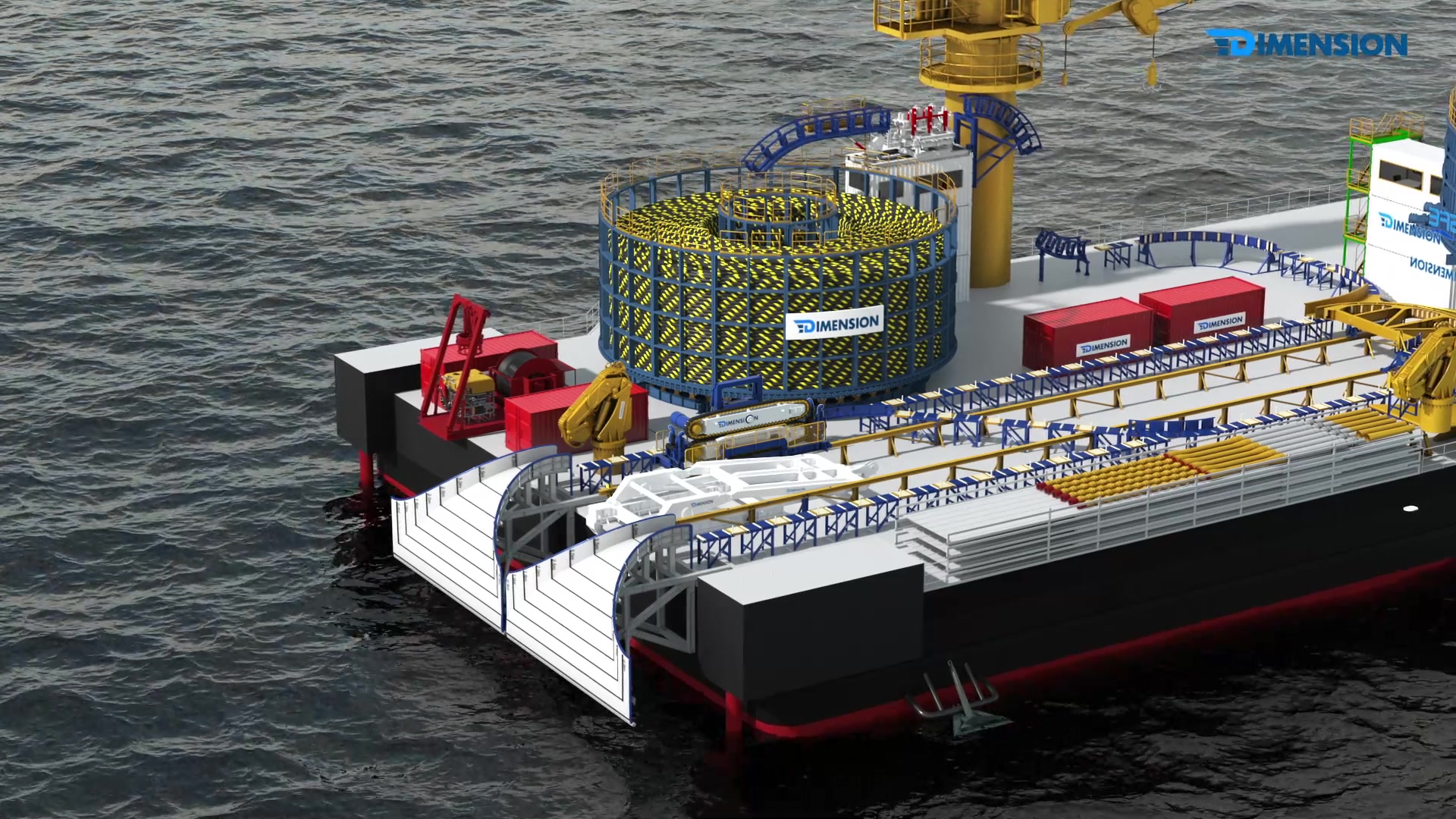
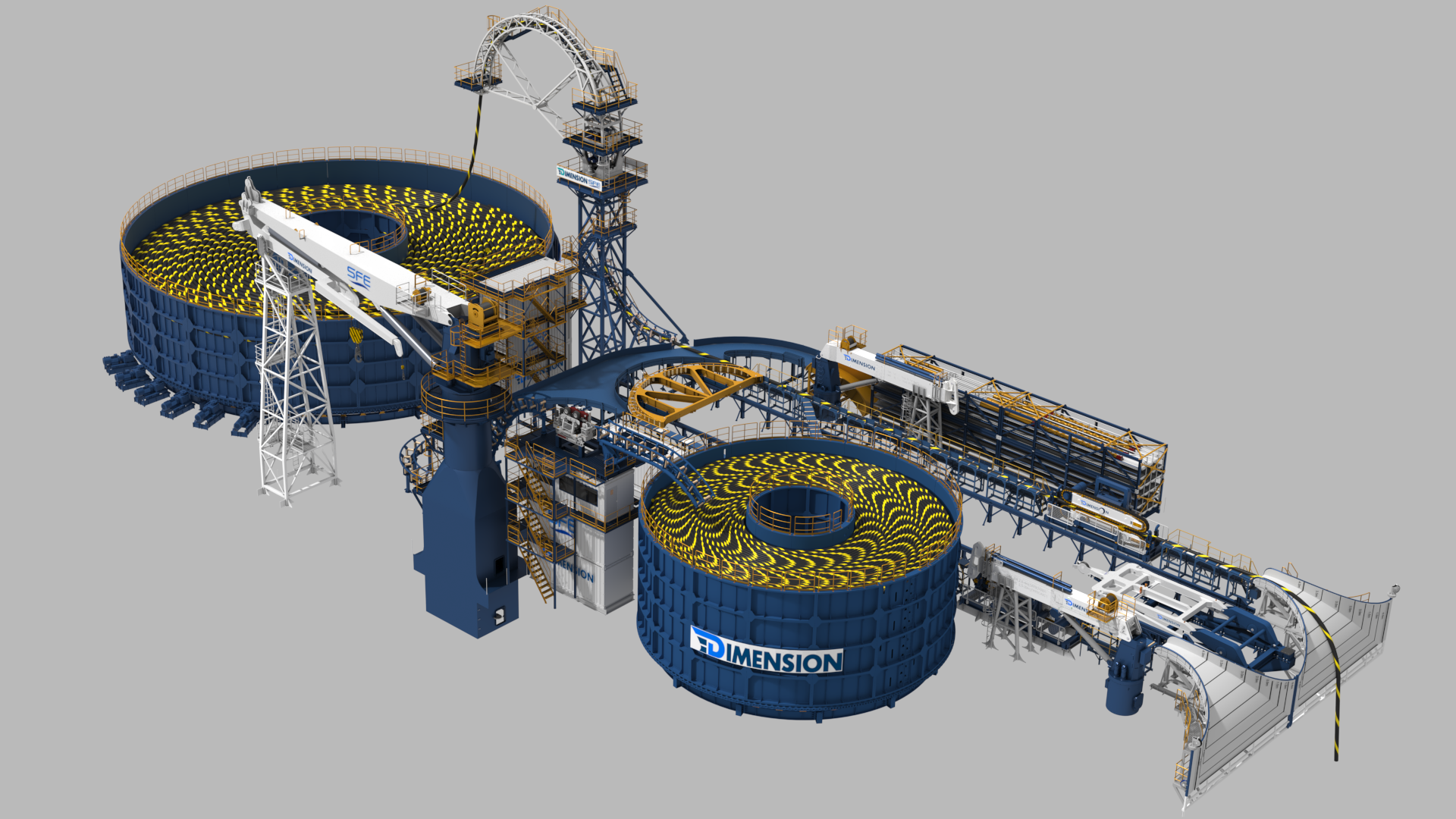
Dimension's Compensated Cable Laying System is a motion-compensated, dual-carousel synchronised lay spread engineered to maintain a stationary catenary and touch-down point through the full inter-array cable lay process — significantly extending the operational weather window and reducing the risk of cable damage during installation.
By actively compensating the position of the overboarding chute, the system holds the cable catenary fixed in space while the vessel moves with the seaway. The result: a stationary TDP, no dragging of cable across the seabed (especially when cornering), and no wave-induced motions running along the catenary that could otherwise overbend the cable.
Engineering, fabrication, FAT and offshore commissioning — all under one roof.
Talk to engineering →Active compensation, target-lane following, and an adaptive quadrant work together to keep the cable safe — from carousel to seabed.
Relatively small motions of the overboarding chute — horizontal or vertical — translate into large variations in the catenary down to the seabed. The Touch Down Point can shift over a large distance, dragging the cable laterally across the seabed and risking damage or kinking around obstacles, especially in a bend. When chute motions exceed a critical velocity, waves running along the catenary can bend the cable beyond its minimum bending radius.
Motion compensated cable lay mitigates these effects by keeping the catenary stationary. Adjustments at the chute hold the TDP fixed regardless of vessel motion, providing:
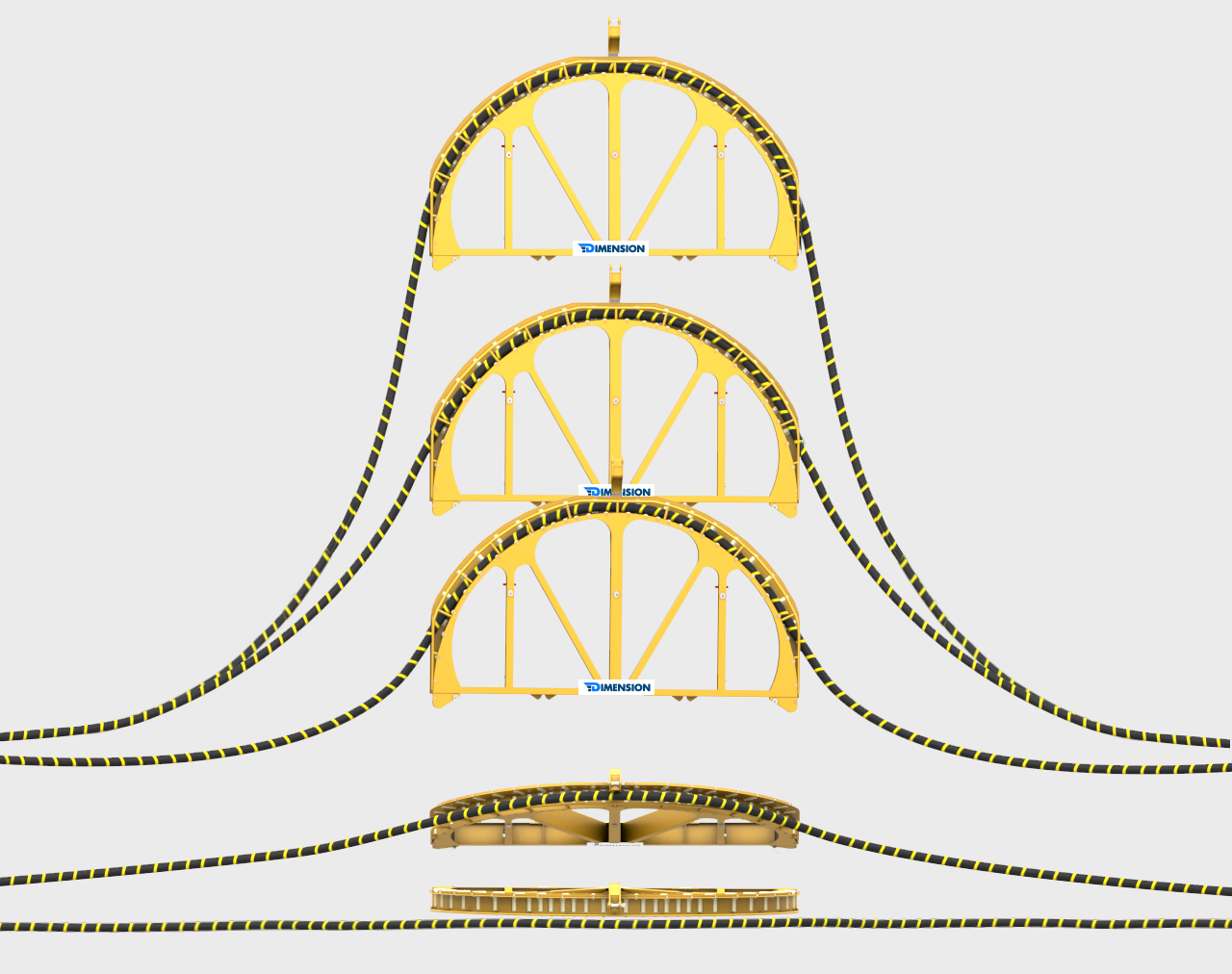
Array cable terminations are commonly lowered using a quadrant that supports the cable slack to the seabed during pull-in to the turbine foundation. Conventional operations are limited by catenary variations and wave motion through the splash zone. Dimension's quadrant handling system is motion compensated and equipped with a cursor that self-aligns the quadrant through the splash zone without inducing catenary variations.
To release the cable to the seabed, the quadrant must be removed from the cable loop. Conventional designs flip the quadrant — but the catenary is uncontrolled during the flip and the minimum bending radius can be exceeded. The Dimension quadrant uses a fully adaptive radius arm that adjusts from its curved MBR position to perfectly straight, allowing the quadrant to be removed when the cable is virtually on the seabed.
Although the actual laying of the cable is relatively fast, preparing cable terminations consumes significant project time. The Compensated Cable Laying System is designed for simultaneous operations during lay — the next cable can be outfitted with cable protection and initiated while lay is in progress. The dual-tensioner concept supports spooling two baskets or carousels simultaneously, saving time in port.
Indicative configuration ranges for the standard system. Final specification is project-dependent and confirmed during FEED.
| Parameter | Value |
|---|---|
| General | |
| Maximum line pull (including dynamics) | 75 MT |
| Minimum product OD | 50 mm |
| Maximum product OD | 500 mm |
| Minimum bending radius (in tension) | 5 m |
| Motion Compensation System | |
| Longitudinal stroke | 8 m |
| Transverse stroke | 8 m |
| Drive system | Electric Rack & Pinion |
| Product Storage | |
| Storage capacity | 6,000 MT (scalable to 9,000 MT carousel) |
| Dimensions | |
| Length | 58 m |
| Width | 13 m |
| Height | 6 m |
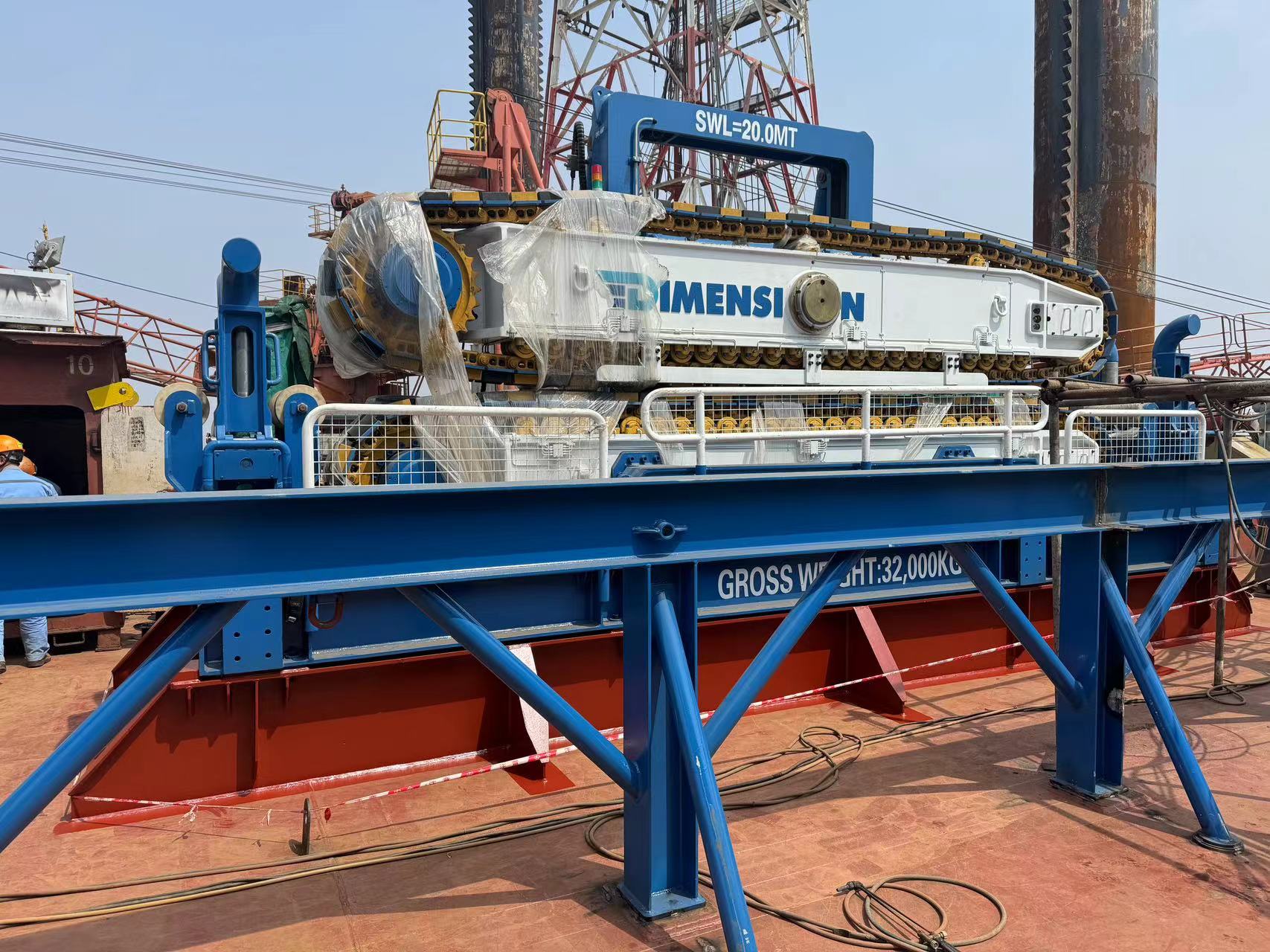
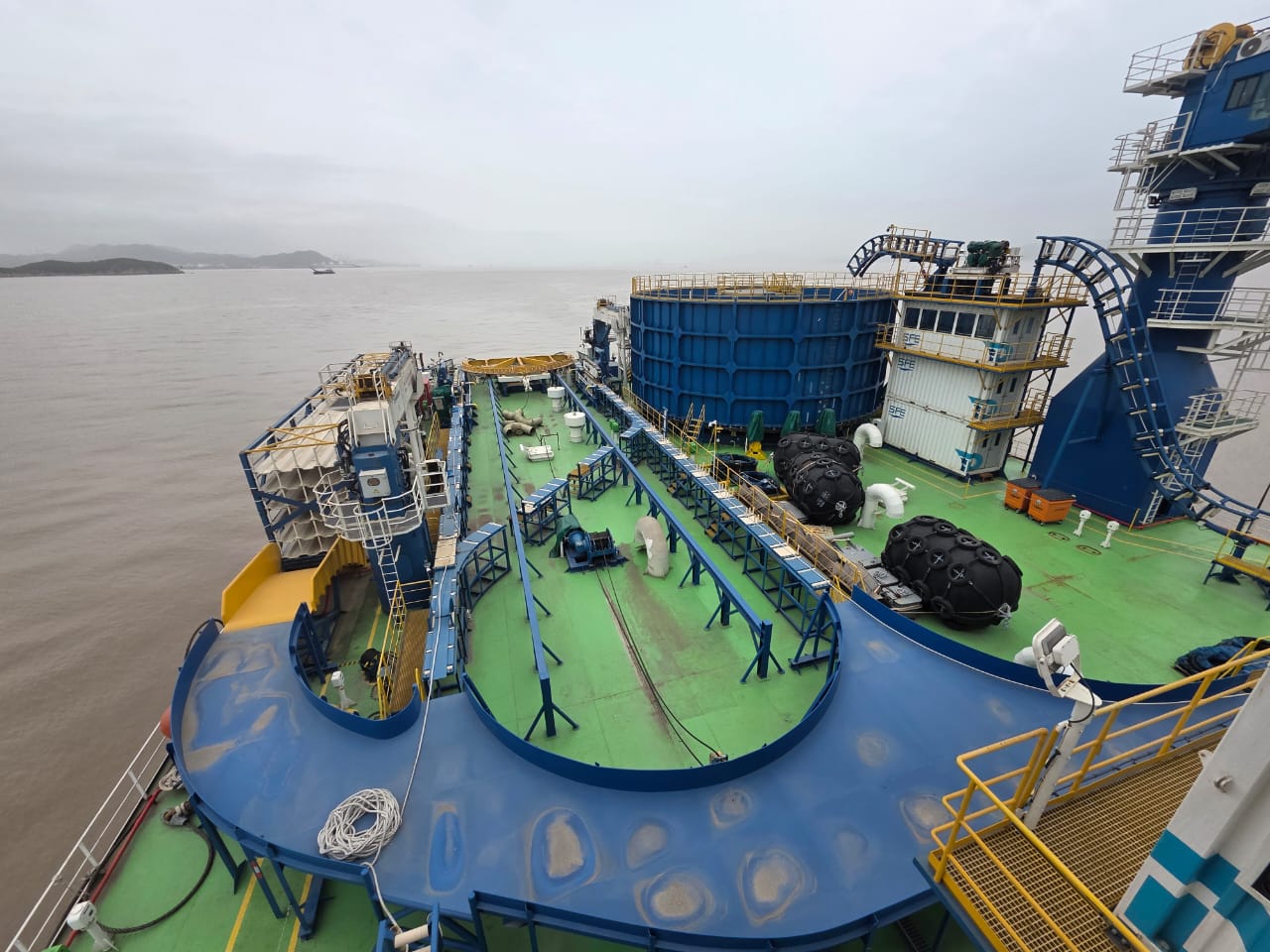
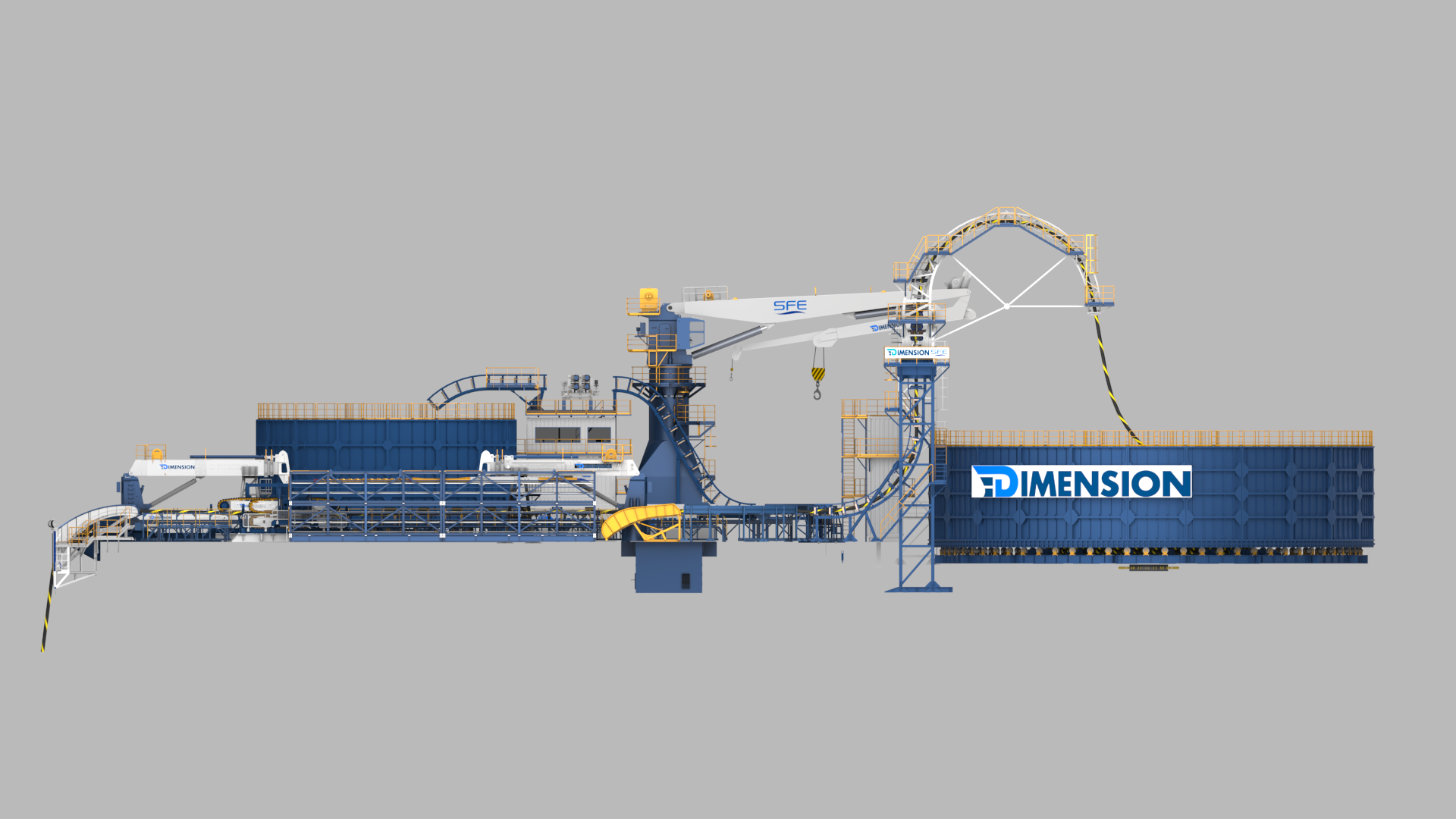
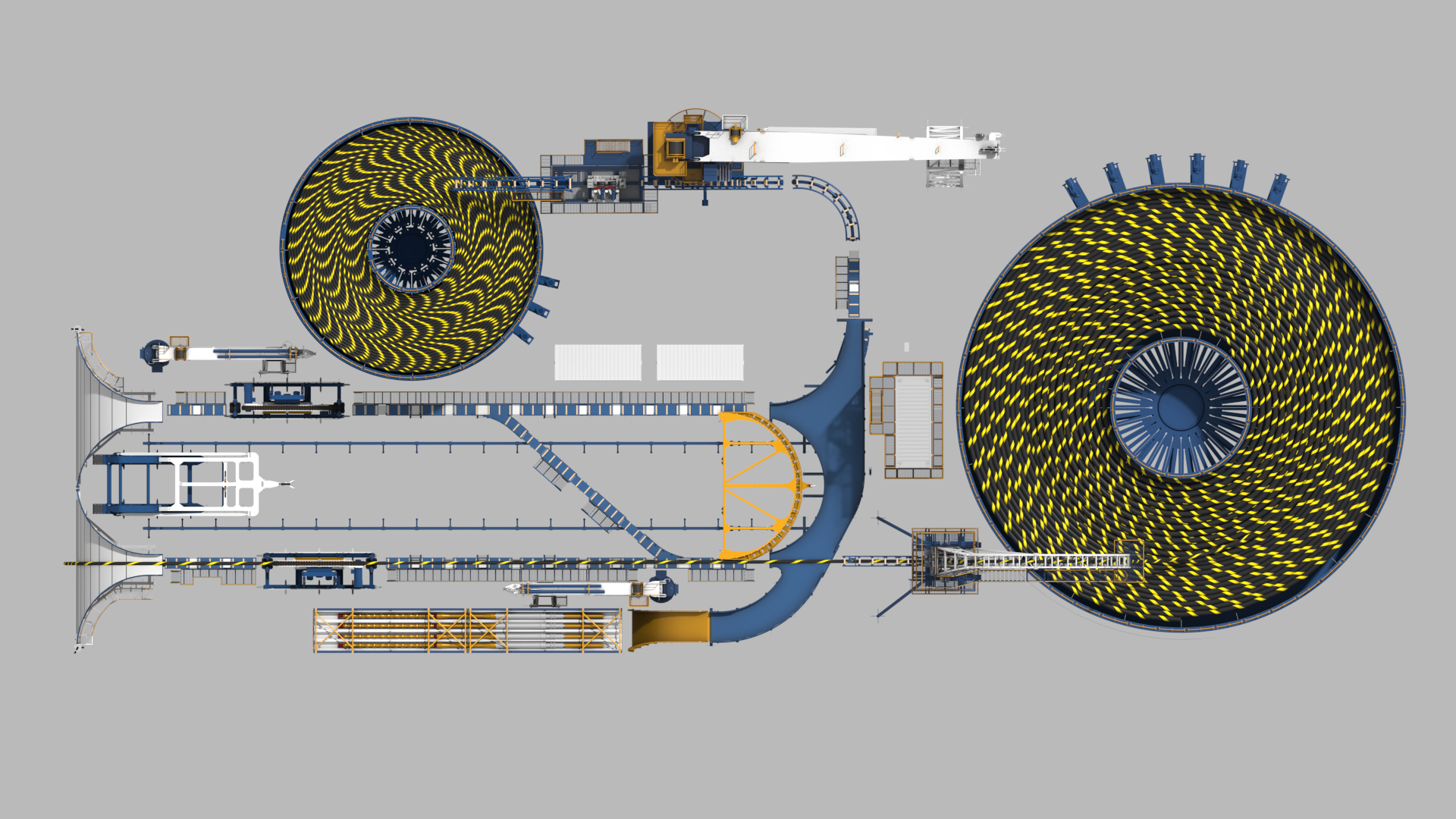
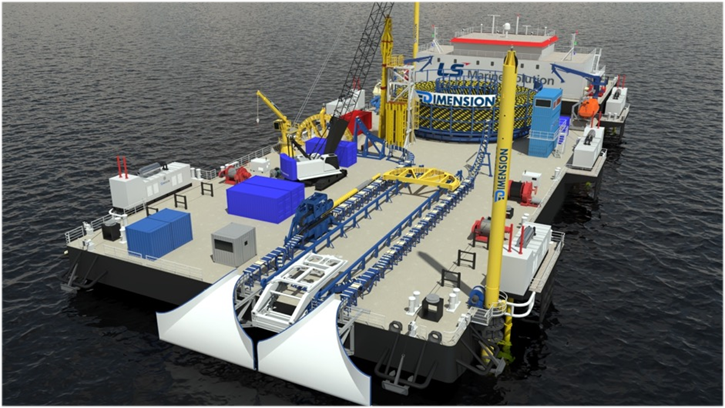
Renderings of the Compensated Cable Laying System showing the full lay spread, dual carousels, cable highway, travelling quadrant and motion-compensation envelope.
Imagery shows project renders of the Dimension Compensated Cable Laying System. Final layout, dimensions and configuration are tailored to the host vessel and scope of work.
Inter-array cable installation on offshore wind farms
Export cable lay in shallow- to medium-water sites
Operations in marginal weather windows where conventional spreads stand down
Cornering and target-lane lay over uneven or rocky seabed
Quadrant lay-down and pull-in at turbine foundations
Repair-spread and replacement campaigns requiring controlled TDP
Get a tailored datasheet, 3D model and budgetary quotation for your specific project.
From feasibility through commissioning — Dimension delivers in-house engineered marine equipment, backed by 14+ years of offshore operations.