Compute capacity, wherever demand takes you.
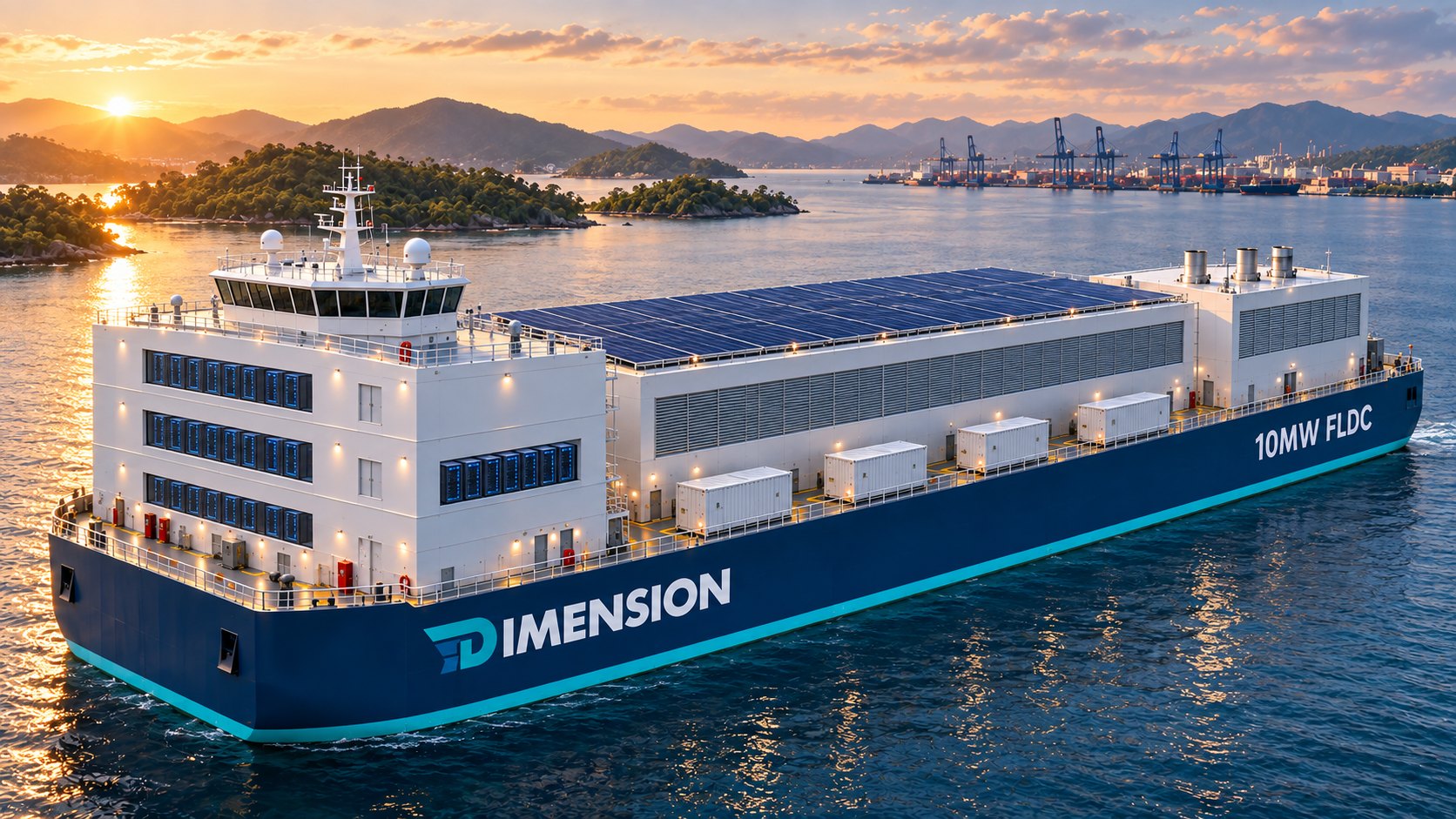
Neumann Class is Dimension's modular floating data centre platform, bringing compute, power and cooling together on a purpose-built marine asset. Designed around a 10MW configuration, with a platform architecture that scales to 20MW and 40MW, it offers a redeployable approach to delivering high-density compute infrastructure. Independent onboard power, marine battery storage and N+1 liquid cooling reduce dependence on land availability and grid connections — giving operators more flexibility over where they deploy capacity.
Digital growth is creating demand for compute in places where conventional infrastructure can take years to catch up. Land acquisition, grid connection queues and cooling requirements can determine when — and where — a data centre becomes viable.
Neumann Class starts with a different question: what if the infrastructure could move closer to demand?
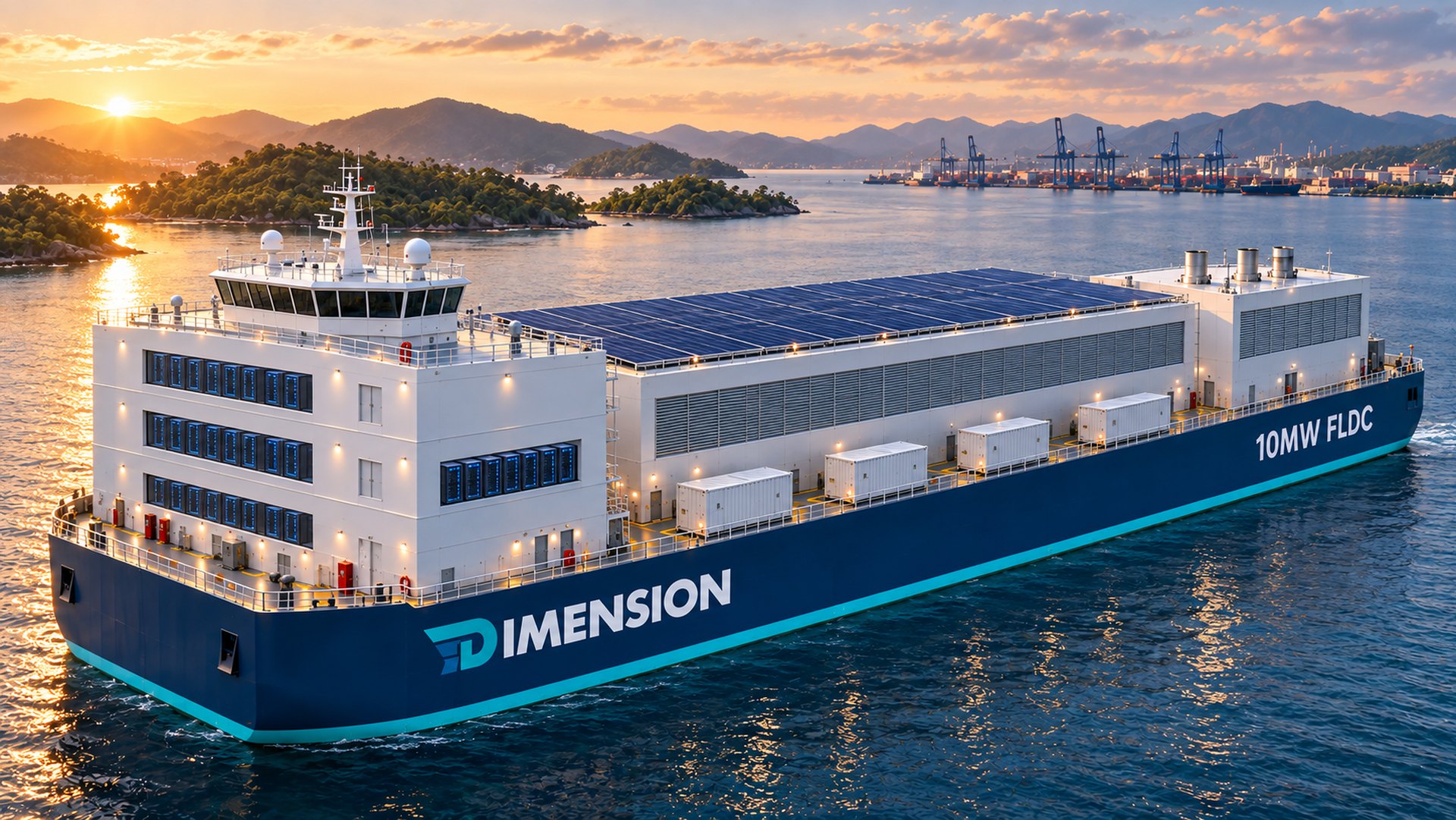
Dimension brings naval architecture and data centre engineering together in one integrated platform. Server facilities, power generation, battery storage and seawater heat rejection are housed aboard a purpose-built steel vessel, designed for deployment in sheltered coastal waters.
The platform combines dual-fuel LNG and diesel generation with containerized battery storage, rooftop solar and N+1 liquid cooling. Its enclosed arrangement provides dedicated spaces for compute and energy systems, with clear access for operations and maintenance.
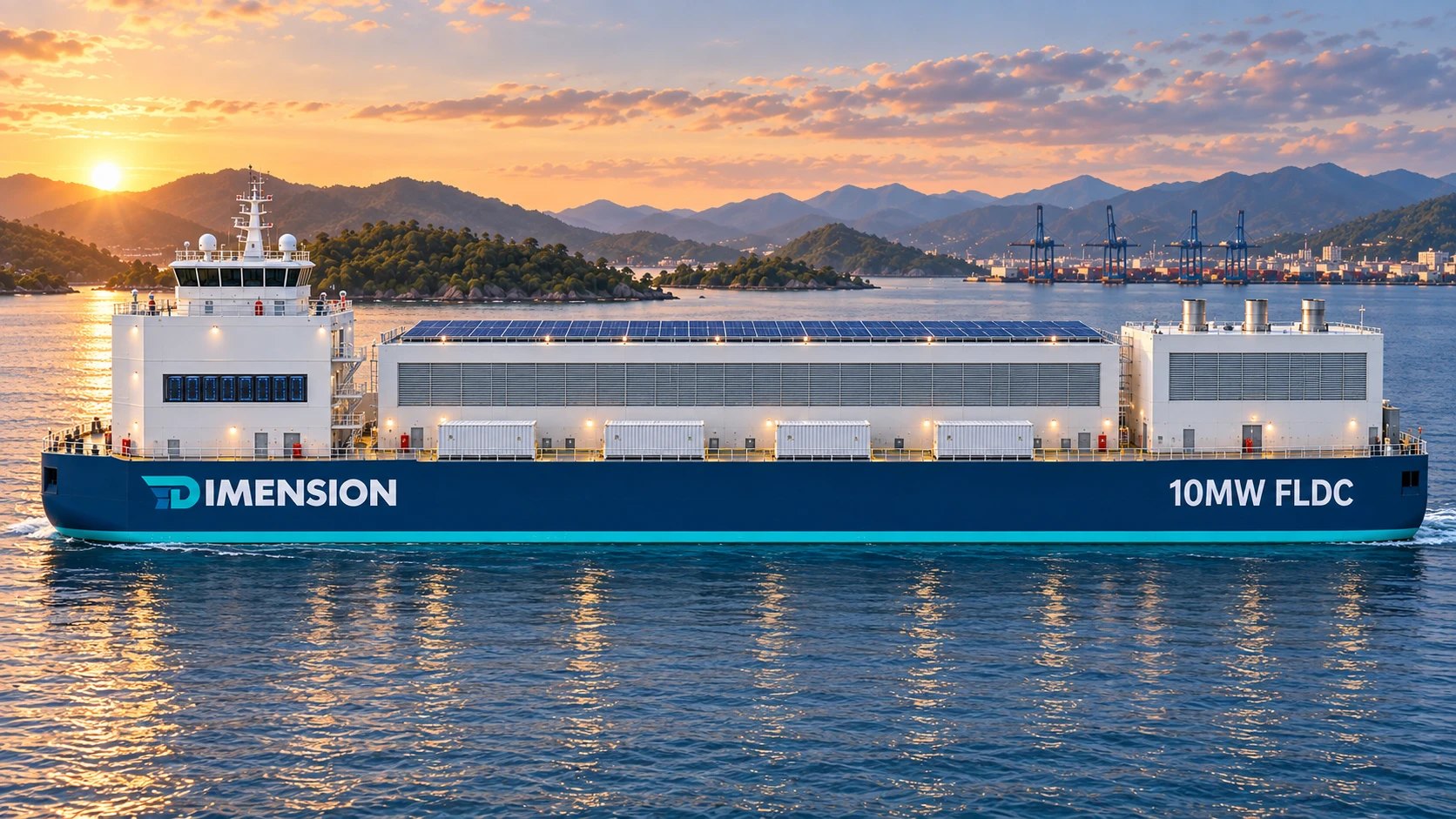
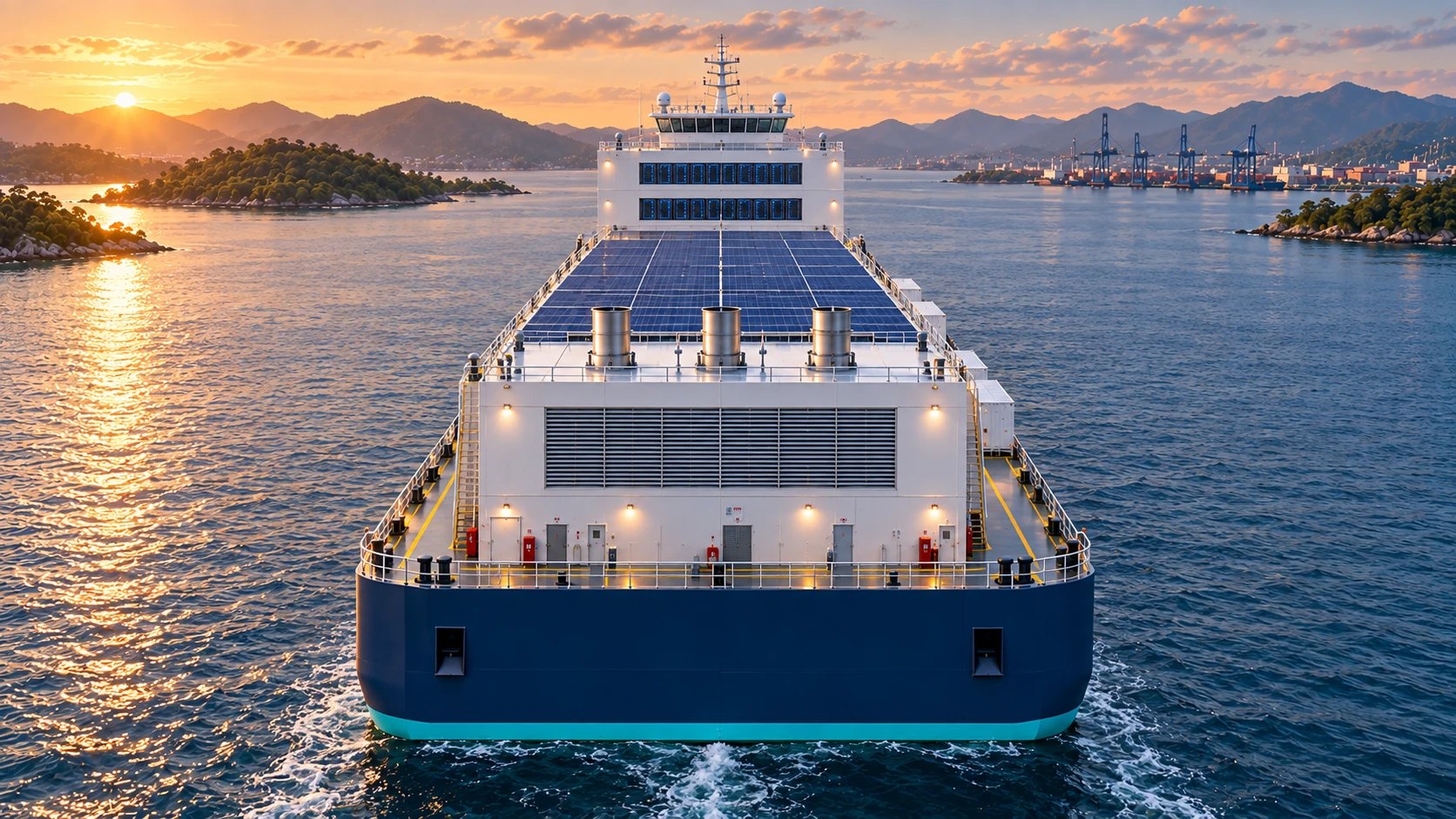
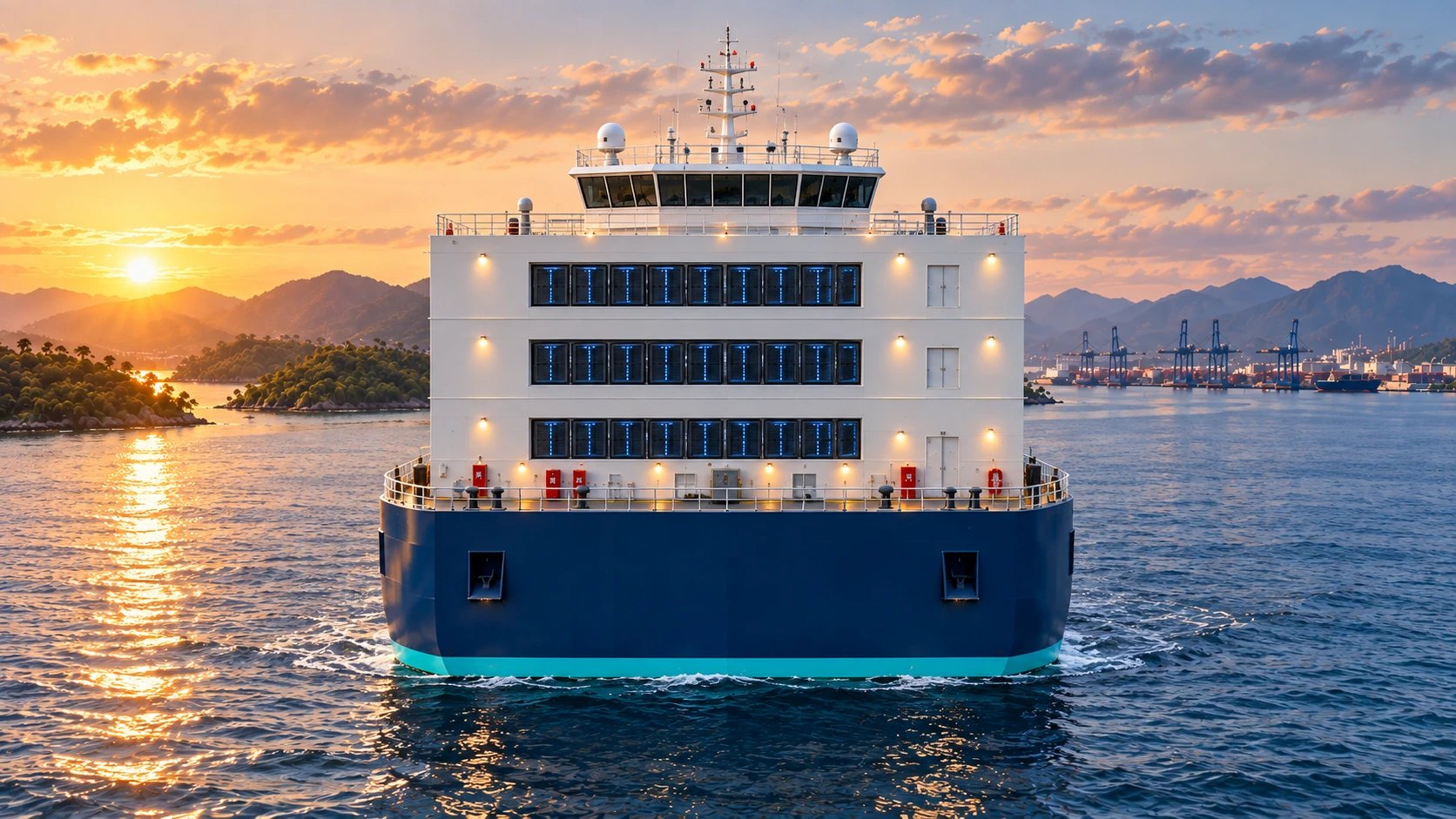
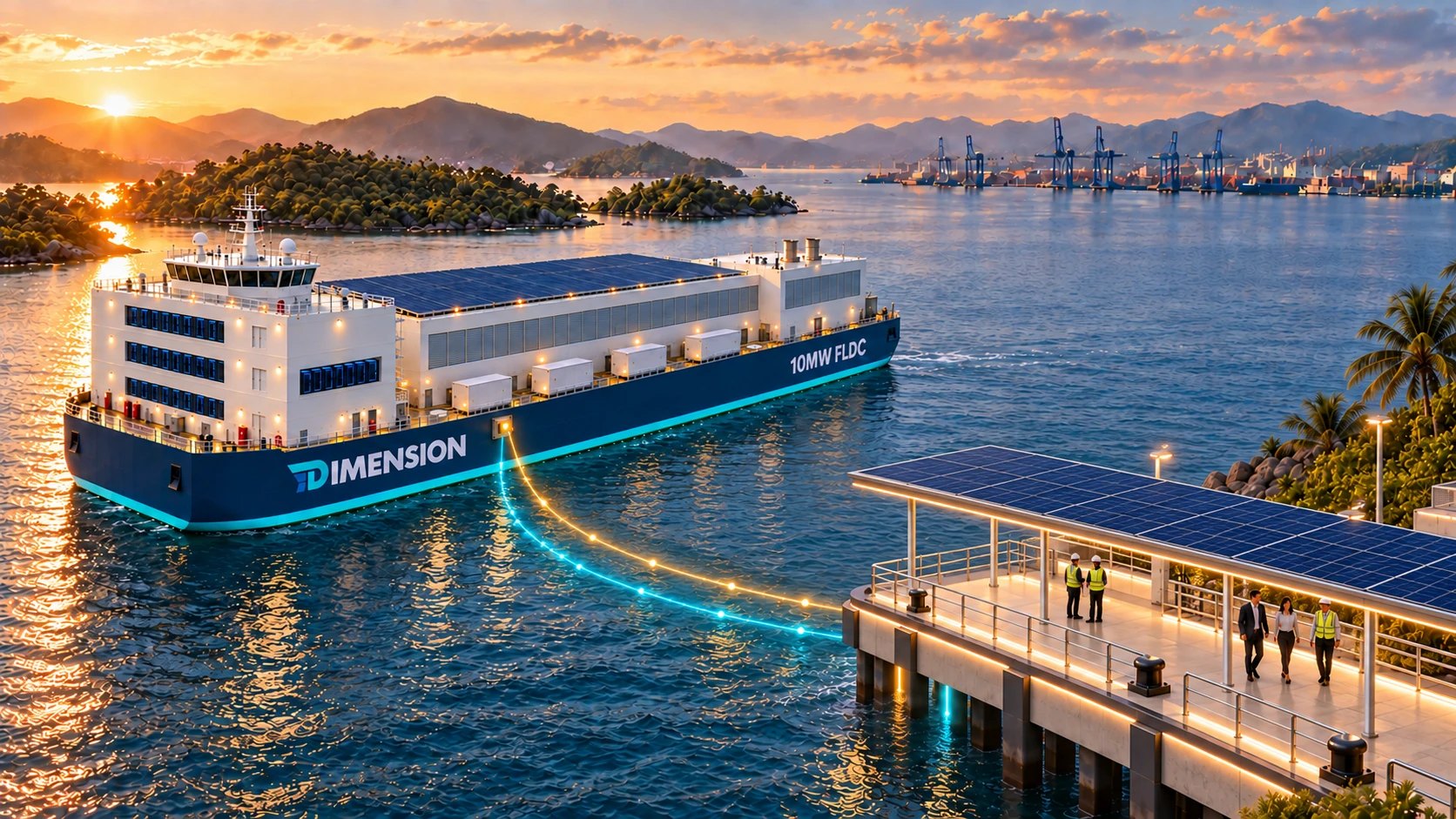
Concept visualisations of the 10MW platform — the deck arrangement, the compute block, the energy systems and the shore interface that ties it into your network.
Integrated compute, power and cooling on a purpose-built steel marine platform — arranged with dedicated spaces for compute and energy systems, and clear access for operations and maintenance.
Compute & control — full-beam, four-level forward server block with a rooftop bridge-style control room. Enclosed data hall with orderly side ventilation.
Integrated energy — dual-fuel LNG/diesel generation, four containerized BESS units and low-profile rooftop solar. Powerhouse and gas-handling equipment enclosed.
Cooling & redundancy — N+1 liquid cooling with seawater heat rejection. A marine cooling architecture for high-density compute.
Marine deployment — recessed spud mooring wells, clear deck access and sheltered-water siting. A redeployable asset as demand evolves.
The Neumann Class architecture starts at 10MW and extends to 20MW and 40MW configurations on larger hulls. Larger generating units and shared marine infrastructure are designed to improve capital efficiency as capacity grows.
Unlike a fixed land asset, the platform can be redeployed as demand changes. That gives operators a longer-term choice: expand capacity, serve a new coastal market or reposition infrastructure as their business evolves.
| 10MW — Baseline Configuration | |
| Genset configuration (N+1) | 4 × 3.5MW |
|---|---|
| Installed generation capacity | 14MW |
| Standby redundancy overhead | 25% |
| 20MW | |
| Genset configuration (N+1) | 5 × 5MW |
| Installed generation capacity | 25MW |
| Standby redundancy overhead | 20% |
| 40MW | |
| Genset configuration (N+1) | 6 × 8MW |
| Installed generation capacity | 48MW |
| Standby redundancy overhead | ~17% |
Capital cost and per-MW economics are shared under NDA — talk to our team.
| Platform & Programme | |
| Type | Modular floating data centre platform |
|---|---|
| Class name | Neumann Class — after John von Neumann |
| Design status | Concept design · September 2026 |
| IT load | 10MW, high-density compute |
| Hull & Siting | |
| Hull | 80 m × 24 m × 5.2 m depth — purpose-built, class-surveyed barge |
| Mooring | Spud mooring, recessed mooring wells |
| Siting | Sheltered, shallow coastal water — indicative depth under 25–30 m |
| Deployment | Redeployable — reposition as demand changes |
| Shore Interface | |
| Fibre connectivity | Dedicated data cable route to shore-side network infrastructure |
| Electrical interface | Separate power cable connection, arrangement defined per site |
| Landing point | Nearby service jetty |
| Power & Energy | |
| Generation | 4 × ~3.5MW dual-fuel LNG/diesel units (N+1) |
| Installed generation capacity | 14MW |
| Energy storage | 4 × containerized BESS units, marine battery ride-through |
| Renewables | Low-profile rooftop solar |
| Grid connection | None required — independent onboard power |
| Cooling | |
| Architecture | N+1 liquid cooling |
| Heat rejection | Seawater |
| Compute Block | |
| Server block | Full-beam, four-level forward block |
| Control room | Rooftop, bridge-style |
| Data hall | Enclosed, with orderly side ventilation |
| Execution | |
| Contract | Single EPC contract with Dimension |
| Fabrication | Hull tendered to a Vietnam yard |
| Integration | Singapore integration and commissioning |
| Build & commissioning | 24 months |
Design basis for the 10MW configuration. Hull dimensions, mooring design and shore interfaces are developed around the deployment site; solar and battery capacities are defined during detailed engineering.
Survey & RFQ — site survey, Vietnam yard RFQ and firm equipment quotes.
Approval & price — class and flag Approval in Principle; EPC price fixed from firm quotes.
Signature — EPC contract signature and mobilisation.
Build & commission — Vietnam fabrication; Singapore integration and commissioning.
Each deployment is developed around its site, marine conditions, connectivity and regulatory requirements. The result is a practical new option for operators seeking greater control over how and where they build compute capacity.
Platform overview — architecture, the 10MW technical basis, shore connectivity and the 10MW / 20MW / 40MW capacity configurations.
Concept design, September 2026. Final arrangement, dimensions and particulars subject to engineering. Render for illustration.
Talk to Dimension about your location, capacity needs and delivery programme.